
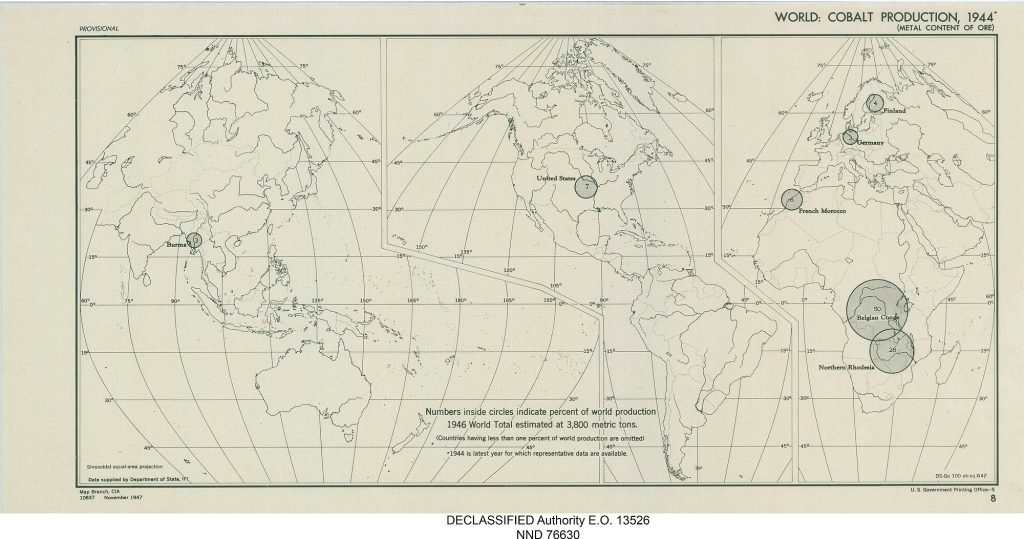
Cobalt producing countries in the world are becoming increasingly important in the global economy because cobalt is one of the most essential minerals used in modern industries. The rise of renewable energy technologies, the rapid adoption of electric vehicles, and the constant demand for electronics such as laptops and smartphones have pushed cobalt into the spotlight as a critical raw material. The production of cobalt is not evenly distributed across the globe, as a few countries dominate the market, while others contribute smaller but still significant amounts. Among them, the Democratic Republic of Congo (DRC) holds a commanding lead as the largest producer, but countries in Europe, Asia, Oceania, and the Americas also play key roles in global supply. This article highlights the meaning of cobalt production, its importance in the global economy, the top 10 cobalt producing countries in the world, a detailed comparison table, other contributing producers, as well as the challenges and future outlook of cobalt mining worldwide.
Table of Contents
- Introduction
- Meaning of Cobalt Production
- Importance of Cobalt in the Global Economy
- Top 10 Cobalt Producing Countries in the World
- Comparison Table of Top 10 Producers
- Other Cobalt-Producing Countries in the World
- Characteristics of Global Cobalt Mining
- Challenges of Cobalt Production
- Future Outlook of Cobalt Industry
- Conclusion
Meaning of Cobalt Production
Cobalt production refers to the mining, extraction, and refining of cobalt ores or the recovery of cobalt as a by-product of mining other base metals such as copper and nickel. Cobalt itself rarely occurs in concentrated ores, which means most global production comes from integrated operations where it is separated after copper or nickel has been processed. Production figures are usually measured in metric tonnes per year, and the refined product is then used in industrial applications such as rechargeable batteries, superalloys, magnets, and catalysts.
Importance of Cobalt in the Global Economy
Cobalt plays an irreplaceable role in many technological sectors. More than 70% of global cobalt demand comes from the battery industry, particularly in lithium-ion batteries used in electric vehicles, mobile phones, and laptops. Beyond this, cobalt alloys are essential in aerospace engines, high-strength tools, magnets, pigments, and chemical catalysts. As nations push toward green energy and reduced carbon emissions, the need for cobalt has skyrocketed, making cobalt-rich countries vital in shaping future industries and global trade.
Top 10 Cobalt Producing Countries in the World
1. Democratic Republic of Congo (DRC)
The Democratic Republic of Congo dominates cobalt mining globally, accounting for over 70% of global output. The DRC produces about 130,000–140,000 tonnes annually, mainly from the Katanga Copperbelt region. Major mines such as Tenke Fungurume, Kamoto, and Mutanda contribute significantly to this supply. While the DRC is resource-rich, concerns about child labor, artisanal mining practices, and political instability continue to affect its reputation in global supply chains.
2. Russia
Russia is the second-largest producer of cobalt, generating around 8,000–9,000 tonnes annually. The country’s production is closely linked with its vast nickel mining industry, particularly in Norilsk, Siberia. Russia is a strategic player in cobalt supply because of its strong refining capacity and role in international markets, though geopolitical tensions sometimes disrupt exports.
3. Indonesia
Indonesia has emerged as a fast-rising cobalt producer in recent years, producing about 7,500–8,000 tonnes annually. The country’s expansion is tied to its booming nickel industry, as cobalt is recovered as a by-product. With investments in battery plants and smelting facilities, Indonesia is positioning itself as a major global hub for electric vehicle supply chains.
4. Australia
Australia produces approximately 5,000–6,000 tonnes of cobalt annually, mainly from deposits in Western Australia. Mines such as the Murrin Murrin laterite project are significant contributors. Australia is known for its high-quality mining standards and stability, making it a reliable cobalt source for international buyers.
5. Philippines
The Philippines contributes around 4,000–4,500 tonnes annually, mainly from nickel-cobalt laterite ores. Mining activities are concentrated in Mindoro and Palawan. Despite environmental concerns, the Philippines continues to play a role in supplying cobalt to Asian markets.
6. Cuba
Cuba is one of the oldest cobalt producers in the world, with current annual production ranging from 3,500–4,000 tonnes. The Moa Bay joint venture is a major source of the country’s cobalt output, and the metal is refined in partnership with Canadian firms.
7. Canada
Canada produces about 3,000–3,500 tonnes annually, with cobalt mined as a by-product of nickel and copper operations. Mining regions in Ontario, Quebec, and Manitoba contribute most of the production. Canada is also focusing on expanding domestic battery manufacturing, which may increase the importance of its cobalt reserves in future.
8. Madagascar
Madagascar contributes about 3,000 tonnes annually, largely from the Ambatovy mine, one of the largest nickel and cobalt operations in the world. Although political instability sometimes affects the mining sector, Ambatovy remains a crucial source of cobalt supply.
9. Papua New Guinea
Papua New Guinea produces roughly 3,000 tonnes annually, mainly from the Ramu Nickel-Cobalt project. The country’s mining sector is a growing contributor to cobalt production, though environmental and social challenges remain.
10. Morocco
Morocco produces about 2,000–2,200 tonnes annually, with most of its cobalt coming from the Bou Azzer mine. Morocco is unique because it produces cobalt as a primary product, unlike most other countries where it is mined as a by-product.
Comparison Table of Top 10 Producers
| Rank | Country | Annual Production (Approx.) |
|---|---|---|
| 1 | Democratic Republic of Congo | 130,000–140,000 tonnes |
| 2 | Russia | 8,000–9,000 tonnes |
| 3 | Indonesia | 7,500–8,000 tonnes |
| 4 | Australia | 5,000–6,000 tonnes |
| 5 | Philippines | 4,000–4,500 tonnes |
| 6 | Cuba | 3,500–4,000 tonnes |
| 7 | Canada | 3,000–3,500 tonnes |
| 8 | Madagascar | ~3,000 tonnes |
| 9 | Papua New Guinea | ~3,000 tonnes |
| 10 | Morocco | 2,000–2,200 tonnes |
Other Cobalt-Producing Countries in the World
| Country | Annual Production (Approx.) |
|---|---|
| South Africa | 1,800–2,000 tonnes |
| United States | 800–1,000 tonnes |
| Zambia | ~1,000 tonnes |
| Myanmar | 500–600 tonnes |
| New Caledonia | ~1,000 tonnes |
These smaller producers contribute to the global market but remain overshadowed by the dominance of the DRC and a few other major countries.
Characteristics of Global Cobalt Mining
- By-Product Mining – Most cobalt is produced as a by-product of copper and nickel mining.
- High Regional Concentration – The DRC alone contributes more than 70% of global output.
- Battery Industry Demand – Over two-thirds of cobalt mined is consumed by the lithium-ion battery sector.
- Volatile Prices – Cobalt prices rise and fall based on demand spikes, political events, and supply chain issues.
- Technological Dependence – The rise of electric vehicles has become the single biggest driver of cobalt demand.
Challenges of Cobalt Production
- Overdependence on DRC: Heavy reliance on one country creates risks for the global market.
- Human Rights Issues: Artisanal mining in the DRC often involves child labor and unsafe practices.
- Environmental Damage: Mining activities cause land degradation, deforestation, and pollution.
- Geopolitical Risks: Trade disputes, sanctions, and political instability threaten supply security.
- Supply Chain Ethics: Companies are under pressure to ensure that their cobalt is responsibly sourced.
Future Outlook of Cobalt Industry
The global demand for cobalt is projected to rise sharply in the coming decades, particularly due to the growth of electric vehicles, smartphones, and renewable energy storage systems. Although research is being conducted to develop cobalt-free batteries, cobalt’s stability and performance advantages make it difficult to replace in the near future. Countries like Indonesia and Australia are expanding production to reduce overdependence on the DRC, while recycling of cobalt from used batteries is also gaining attention as a sustainable source.
Frequently Asked Questions – Top 10 Cobalt Producing Countries
1. Which country is the largest producer of cobalt in the world?
The Democratic Republic of Congo (DRC) is the largest producer of cobalt in the world, accounting for over 70% of global supply with about 130,000–140,000 tonnes annually.
2. What is cobalt mainly used for?
Cobalt is mainly used in the production of rechargeable lithium-ion batteries for electric vehicles, smartphones, and laptops. It is also used in aerospace alloys, magnets, and catalysts.
3. Which countries outside Africa produce significant amounts of cobalt?
Major non-African cobalt producers include Russia, Indonesia, Australia, the Philippines, Cuba, and Canada.
4. Is cobalt only found in Africa?
No. While Africa, especially the DRC, dominates cobalt supply, other regions including Asia, Europe, and the Americas also produce cobalt.
5. Why is cobalt important for electric vehicles?
Cobalt stabilizes lithium-ion batteries, increases energy density, and improves battery lifespan, making it essential for electric vehicle performance and safety.
6. Which country in Asia is a major producer of cobalt?
Indonesia is the leading cobalt producer in Asia, producing around 7,500–8,000 tonnes annually.
7. Does the United States produce cobalt?
Yes, but on a smaller scale. The United States produces about 800–1,000 tonnes of cobalt annually.
8. Is cobalt mining environmentally friendly?
Cobalt mining often causes environmental challenges such as deforestation, soil erosion, and water pollution, especially in artisanal mining areas.
9. Are there efforts to reduce dependence on cobalt?
Yes. Research is ongoing into cobalt-free batteries, and recycling cobalt from used batteries is also being developed, but cobalt remains difficult to replace completely.
10. What is the future of cobalt demand worldwide?
Global cobalt demand is expected to rise significantly with the growth of electric vehicles, renewable energy, and electronics, keeping cobalt central to future energy transitions.
SEE ALSO: Diamond Producing Countries in the World and Their Output Top 10
Conclusion – Top 10 Cobalt Producing Countries
The top 10 cobalt producing countries in the world clearly demonstrate the overwhelming dominance of the Democratic Republic of Congo, but also highlight the importance of countries like Russia, Indonesia, Australia, and Canada in diversifying global supply. Cobalt’s role in driving electric mobility and renewable energy adoption ensures that it will remain one of the most critical minerals in the global economy. Moving forward, the world must balance the need for more cobalt with ethical mining practices, sustainability, and supply chain resilience to ensure a stable and responsible future for this vital resource.