
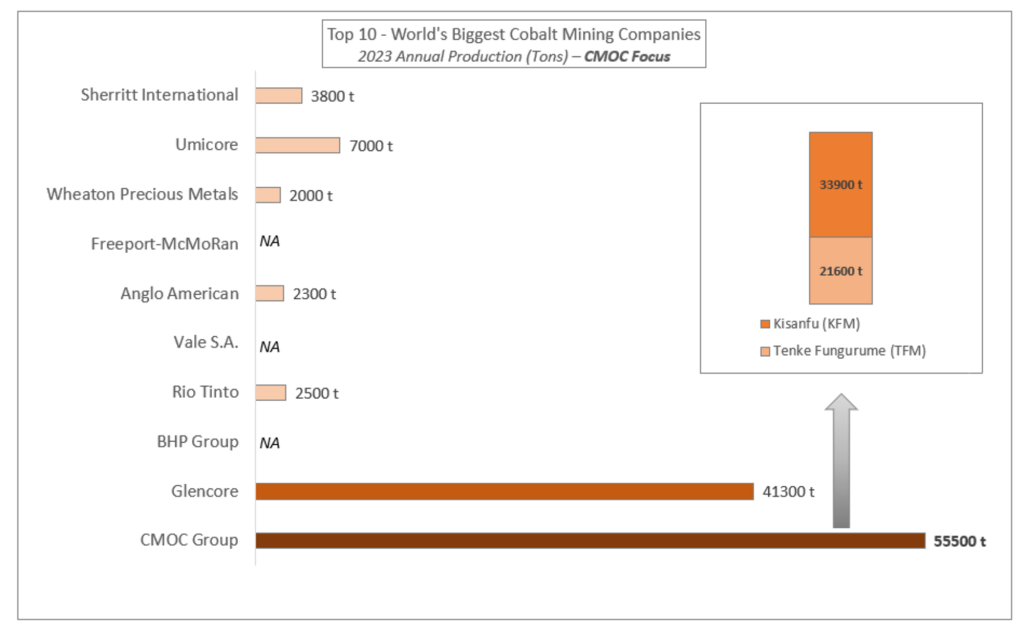
Cobalt producing countries in Africa are at the heart of the global cobalt industry, since the continent holds some of the richest deposits of this critical mineral. Africa’s importance is highlighted by the fact that the Democratic Republic of Congo (DRC) alone supplies more than 70% of the world’s cobalt, making it not only the largest producer on the continent but also the global leader. However, several other African countries, though smaller in scale, contribute to global cobalt supply and support the continent’s reputation as a hub for mineral resources. With the rising global demand for cobalt in electric vehicle batteries, smartphones, and renewable energy systems, Africa’s role in cobalt mining is more crucial than ever before. This article explores the meaning of cobalt production, the significance of cobalt in modern industries, the top 10 cobalt producing countries in Africa, a comparison table, other minor producers, key characteristics, challenges, and the future outlook of cobalt mining in Africa.
Table of Contents
- Introduction
- Meaning of Cobalt Production
- Importance of Cobalt in Africa’s Economy
- Top 10 Cobalt Producing Countries in Africa
- Comparison Table of Top 10 Producers
- Other Cobalt-Producing Countries in Africa
- Characteristics of Cobalt Mining in Africa
- Challenges of Cobalt Production in Africa
- Future Outlook of Cobalt Mining in Africa
- Conclusion
Meaning of Cobalt Production
Cobalt production in Africa refers to the mining, extraction, and refining of cobalt ores or cobalt that is obtained as a by-product from other base metals, such as copper and nickel. African cobalt production is unique because many deposits are located in rich copper belts, especially in Central Africa, making it a crucial region for both copper and cobalt mining.
Importance of Cobalt in Africa’s Economy
Cobalt plays a vital role in Africa’s economic development. The mineral brings in billions of dollars in export earnings, attracts foreign direct investment, and supports thousands of jobs across mining, refining, and transportation. In addition, cobalt has geopolitical importance because it places African countries—particularly the DRC—at the center of global energy transition and electric vehicle supply chains.
Top 10 Cobalt Producing Countries in Africa
1. Democratic Republic of Congo (DRC)
The DRC is the undisputed leader in cobalt production, not just in Africa but globally. The country produces about 130,000–140,000 tonnes annually, making up more than 70% of global supply. Most of this production comes from the Katanga Copperbelt region, with major mines such as Tenke Fungurume, Kamoto, and Mutanda leading the way. The DRC’s dominance, however, is challenged by concerns of artisanal mining, child labor, and governance issues.
2. Madagascar
Madagascar is the second-largest cobalt producer in Africa, producing about 3,000 tonnes annually, primarily from the Ambatovy mine, which is among the world’s biggest nickel-cobalt projects. The country’s production makes it an important African contributor, despite being much smaller compared to the DRC.
3. Morocco
Morocco is a unique cobalt producer because, unlike most countries where cobalt is mined as a by-product, it produces cobalt as a primary product. The Bou Azzer mine is the main source, with an annual production of around 2,000–2,200 tonnes. Morocco’s position as a stable North African country also makes it a reliable supplier.
4. South Africa
South Africa produces about 1,800–2,000 tonnes of cobalt annually, mainly as a by-product of its large nickel and copper mining operations. The country’s well-developed mining infrastructure supports cobalt recovery, although it is not a leading global supplier.
5. Zambia
Zambia contributes about 1,000 tonnes annually, with cobalt produced primarily as a by-product of its copper mining industry. The Zambian Copperbelt is geologically linked to the DRC’s Katanga belt, making Zambia an important regional producer.
6. Zimbabwe
Zimbabwe produces around 800–1,000 tonnes annually, with cobalt extracted mainly from nickel and copper operations. The country has significant potential for growth, but economic challenges and underinvestment hinder expansion.
7. Uganda
Uganda contributes smaller quantities of cobalt, estimated at 500–600 tonnes annually, from operations linked to copper-cobalt ores. Though not a major producer, Uganda’s reserves could be expanded with further investment.
8. Botswana
Botswana produces 200–300 tonnes of cobalt annually, largely from nickel-cobalt mines. The country is focusing on diversifying beyond diamonds, and cobalt is part of its mineral development strategy.
9. Namibia
Namibia’s cobalt production is about 200–300 tonnes annually, often recovered as a by-product from its copper and nickel projects. Namibia’s mining-friendly environment supports further exploration.
10. Ethiopia
Ethiopia contributes smaller amounts, estimated at 100–200 tonnes annually, from emerging nickel-cobalt mining projects. Though still in early development, Ethiopia represents potential growth for the future.
Comparison Table of Top 10 Producers
| Rank | Country | Annual Production (Approx.) |
|---|---|---|
| 1 | DRC | 130,000–140,000 tonnes |
| 2 | Madagascar | ~3,000 tonnes |
| 3 | Morocco | 2,000–2,200 tonnes |
| 4 | South Africa | 1,800–2,000 tonnes |
| 5 | Zambia | ~1,000 tonnes |
| 6 | Zimbabwe | 800–1,000 tonnes |
| 7 | Uganda | 500–600 tonnes |
| 8 | Botswana | 200–300 tonnes |
| 9 | Namibia | 200–300 tonnes |
| 10 | Ethiopia | 100–200 tonnes |
Other Cobalt-Producing Countries in Africa
| Country | Annual Production (Approx.) |
|---|---|
| Malawi | ~100 tonnes |
| Tanzania | <100 tonnes |
| Nigeria | <100 tonnes |
These countries produce very small amounts of cobalt, but ongoing exploration projects could expand their roles in the future.
Characteristics of Cobalt Mining in Africa
- Resource Dominance – Africa, especially the DRC, dominates global cobalt reserves and production.
- By-Product Nature – Most cobalt in Africa is produced as a by-product of copper and nickel.
- Export-Oriented – Much of the cobalt is exported to Asia, especially China, for refining and battery manufacturing.
- Artisanal Mining – A significant share of cobalt in Africa, especially in the DRC, comes from artisanal and small-scale miners.
- Foreign Investment – Chinese and Western companies are heavily involved in Africa’s cobalt mining projects.
Challenges of Cobalt Production in Africa
- Human Rights Concerns: Reports of child labor and unsafe artisanal mining conditions in the DRC.
- Environmental Issues: Mining leads to deforestation, soil erosion, and water pollution.
- Political Instability: Countries like the DRC and Zimbabwe face governance and regulatory challenges.
- Export Dependence: Most African countries export raw cobalt rather than refining it locally.
- Infrastructure Limitations: Poor roads, power supply, and refining capacity reduce efficiency.
Future Outlook of Cobalt Mining in Africa
Africa’s cobalt production is expected to remain dominant in the coming decades, especially with the DRC maintaining its strong lead. However, countries such as Morocco, Madagascar, and Zambia are also positioned to expand production. The growth of electric vehicles and renewable energy storage ensures cobalt will remain in high demand, but African nations must address challenges like artisanal mining, environmental management, and local value addition. With better governance, investment in refining, and responsible mining practices, Africa could not only remain the global leader but also capture more value from its cobalt resources.
Frequently Asked Questions – Cobalt Producing Countries in Africa
1. Which African country produces the most cobalt?
The Democratic Republic of Congo (DRC) produces the most cobalt in Africa, with an output of about 130,000–140,000 tonnes annually, accounting for over 70% of global supply.
2. What are the top cobalt producing countries in Africa?
The top cobalt producing countries in Africa are the Democratic Republic of Congo, Madagascar, Morocco, South Africa, Zambia, Zimbabwe, Uganda, Botswana, Namibia, and Ethiopia.
3. Why is cobalt important to Africa’s economy?
Cobalt provides billions in export revenue, supports jobs, attracts foreign investment, and places Africa at the center of global electric vehicle and renewable energy supply chains.
4. Which North African country produces cobalt?
Morocco is a major North African cobalt producer, contributing around 2,000–2,200 tonnes annually from the Bou Azzer mine.
5. Is cobalt only produced in Central Africa?
No. While Central Africa, especially the DRC and Zambia, dominates, cobalt is also produced in North Africa (Morocco), Southern Africa (South Africa, Zimbabwe, Botswana, Namibia), and East Africa (Uganda, Ethiopia, Madagascar).
6. Does South Africa produce cobalt?
Yes, South Africa produces about 1,800–2,000 tonnes annually, mainly as a by-product of nickel and copper mining.
7. How much cobalt does Zambia produce?
Zambia produces around 1,000 tonnes annually, mainly as a by-product of copper mining in the Copperbelt region.
8. What challenges face cobalt production in Africa?
Challenges include artisanal mining with poor labor conditions, child labor concerns, environmental damage, political instability, and dependence on exporting raw cobalt without local refining.
9. Is all African cobalt exported?
Most African cobalt is exported to countries like China for refining and battery production, though efforts are increasing to build local refining capacity.
10. What is the future of cobalt mining in Africa?
Cobalt mining in Africa is expected to expand due to global demand for electric vehicles and renewable energy. However, future growth depends on investment in infrastructure, ethical mining practices, and local value addition.
SEE ALSO: Top 10 Cobalt Producing Countries in the World and Their Output
Conclusion – Cobalt Producing Countries in Africa
The top 10 cobalt producing countries in Africa reveal the continent’s overwhelming importance to global cobalt supply, led by the Democratic Republic of Congo’s massive output. While countries like Madagascar, Morocco, South Africa, and Zambia contribute smaller but still important amounts, Africa’s dominance in cobalt remains unmatched. As the world shifts toward clean energy and electric mobility, African cobalt will continue to be a central pillar of industrial development and global trade. To maximize benefits, African nations must invest in ethical mining, sustainable practices, and local refining industries, ensuring cobalt becomes a true driver of economic transformation across the continent.