
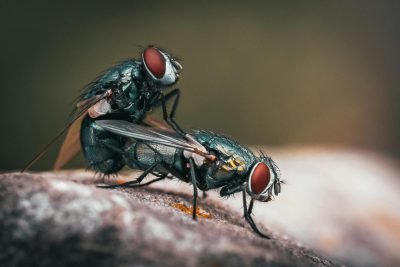
Reproduction is an essential biological process through which organisms produce offspring, ensuring the continuity of their species from one generation to another, and in the case of the housefly, this process is rapid, prolific, and adapted for survival in a variety of environments. The housefly (Musca domestica) reproduces sexually, and its life cycle includes distinct stages that enable it to multiply rapidly and spread widely, making it one of the most common and resilient insects in human habitats.
Table of Contents
- Introduction
- Meaning of Reproduction in Housefly
- Structure of the Reproductive Organs in Housefly
- Process of Reproduction in Housefly
- Characteristics of Housefly Reproduction
- Life Cycle of the Housefly
- Importance and Biological Implication of Reproduction in Housefly
- Revision Questions and Answers
What are Houseflies?
Houseflies are insects that belong to the order Diptera and the family Muscidae, scientifically known as Musca domestica. They have a pair of wings, large compound eyes, and specialized mouthparts adapted for sponging liquids. Houseflies are commonly found in human habitats, especially in areas with food waste, garbage, or decaying organic matter. They are highly adaptable, reproduce rapidly, and can serve as vectors for various pathogens, making them significant in public health. Despite being pests, houseflies play ecological roles in decomposing organic material and nutrient cycling.
Meaning of Reproduction in Housefly
Reproduction in housefly refers to the biological process by which adult male and female houseflies mate, and the fertilized female lays eggs that develop into new individuals through a metamorphic cycle. This reproductive mechanism helps in the rapid multiplication of housefly populations and plays a key role in their persistence across seasons and environments.
Structure of the Reproductive Organs in Housefly
In the male housefly, the reproductive organs consist of a pair of testes where sperm cells are produced, vas deferens that transport the sperm, seminal vesicles where sperm is stored, and an ejaculatory duct that conveys sperm to the female during mating. The male genitalia are well-developed and specialized for effective sperm transfer during copulation.
In the female housefly, the reproductive system includes a pair of ovaries responsible for producing eggs, oviducts through which the eggs pass, a uterus for temporary holding of eggs, and a spermatheca where sperm is stored after mating, allowing the female to fertilize multiple batches of eggs over time. The ovipositor helps the female in laying eggs on suitable decaying organic matter.
Process of Reproduction in Housefly
The process of reproduction in housefly begins when the male and female mate, which usually occurs during the warmer parts of the day, and involves the transfer of sperm from the male to the female through the reproductive opening.
Once mating has occurred, the female stores the sperm in her spermatheca and later uses it to fertilize her eggs. The fertilized female then seeks moist and decaying organic materials, such as garbage or feces, and lays hundreds of tiny white eggs in clusters. These eggs hatch within 8 to 24 hours into larvae known as maggots, which feed voraciously on the surrounding organic material. After passing through three larval stages, they form pupae and then emerge as adult houseflies. This entire cycle, from egg to adult, can be completed in as little as 7 to 10 days under favorable conditions.
Characteristics of Housefly Reproduction
- Houseflies reproduce sexually through the union of male and female gametes.
- A single female can lay up to 500 eggs in her lifetime, often in several batches.
- Reproduction is very rapid, allowing quick population expansion.
- Fertilization is internal and followed by external egg-laying.
- Development is indirect and includes complete metamorphosis: egg → larva → pupa → adult.
Life Cycle of the Housefly
The life cycle of the housefly involves four main stages:
- Egg Stage: Females lay eggs on decaying matter.
- Larval Stage (Maggot): Eggs hatch into larvae that feed and grow quickly.
- Pupal Stage: Larvae form protective cases and undergo metamorphosis.
- Adult Stage: Adult houseflies emerge and become ready to reproduce within a few days.
This cycle supports their ability to breed and multiply rapidly in warm and unhygienic environments.
Importance and Biological Implication of Reproduction in Housefly
The rapid reproduction of houseflies makes them major vectors of disease because they breed in unhygienic environments and often come in contact with human food and surfaces, transferring pathogens mechanically. Understanding their reproductive biology helps in planning effective control measures such as waste management, sanitation, and pest control strategies. It also highlights the biological adaptations that allow houseflies to thrive in human settlements.
Revision Questions and Answers
1. What type of reproduction occurs in houseflies?
Answer: Houseflies reproduce sexually through internal fertilization.
2. How many eggs can a female housefly lay in her lifetime?
Answer: A female housefly can lay up to 500 eggs in her lifetime.
3. Name the four stages of the housefly life cycle.
Answer: Egg, Larva (Maggot), Pupa, and Adult.
4. Where does the female housefly usually lay her eggs?
Answer: On moist, decaying organic matter like garbage or feces.
5. What is the function of the spermatheca in female houseflies?
Answer: It stores sperm after mating, allowing fertilization of eggs over time.
6. What is the biological significance of the rapid reproduction in houseflies?
Answer: It enables quick population growth, making them widespread and increasing their potential to spread diseases.
STUDY ALSO: Feeding Process of Housefly, Reproduction and Importance
Conclusion – Reproduction in houseflies
Reproduction in houseflies is a key reason for their rapid population growth and widespread presence. By understanding their reproductive structure and process, we can better appreciate how quickly they multiply and why effective control measures are important. This knowledge is especially valuable in biology and public health, as it helps us manage environments where houseflies pose a risk to hygiene and disease transmission.
RELATED ARTICLES
- Reproduction in Cockroach: Meaning, structure and process of reproduction
- Reproduction in Earthworm: Meaning, Structure and Process
- Reproduction in Hydra: Meaning Types and Structures, ,
- Reproduction in Paramecium: Meaning, Methods, and Importance
- Reproduction in Spirogyra, meaning, structure, methods and importance
- Reproduction in Amoeba: Meaning, Process, and Key Facts