
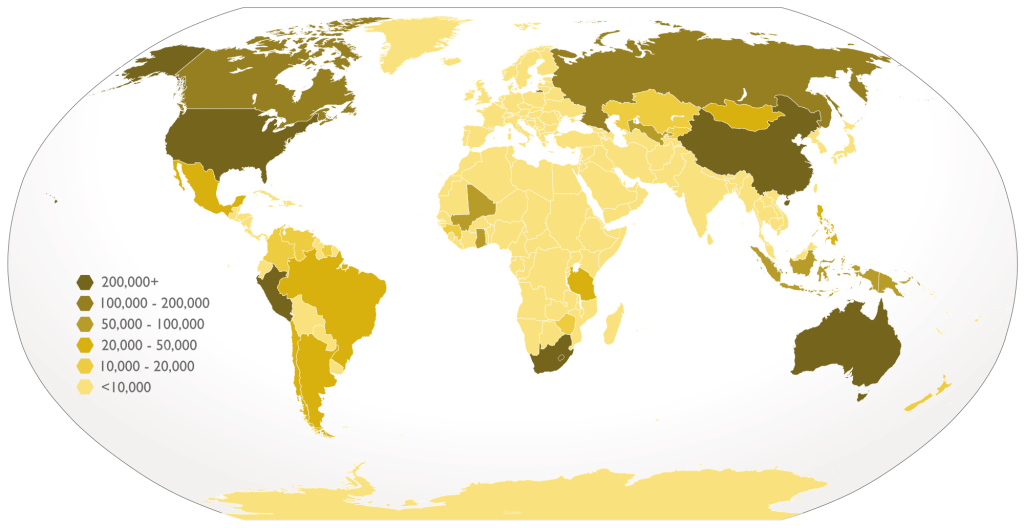
Gold has remained one of the most valuable and desired natural resources for centuries, serving as a foundation for wealth, currency stability, jewelry, and industrial applications. In today’s global economy, gold production plays a crucial role in determining the financial strength of nations, and a handful of countries dominate the international gold mining sector. This article explores the top 10 gold producing countries in the world, highlighting their annual production levels, mining industries, key companies, and overall importance in the global market.
Table of Contents
- Introduction
- Importance of Gold Production in the Global Economy
- Top 10 Gold Producing Countries in the World
- Global Gold Market Trends and Future Outlook
- FAQ
- Conclusion
Importance of Gold Production in the Global Economy
Gold is more than just a precious metal for jewelry; it is also a safe-haven asset in times of economic instability. Central banks around the world hold gold reserves to support their currencies, while investors turn to gold as protection against inflation and geopolitical risks.
The contribution of gold mining to national economies is multifaceted:
- It generates export revenue and foreign exchange.
- It creates jobs for thousands of workers in mining regions.
- It stimulates infrastructure development in remote areas.
- It attracts foreign direct investment from multinational mining companies.
Therefore, analyzing gold production levels not only reflects natural resource endowment but also provides insights into the strategic economic positioning of countries.
Top 10 Gold Producing Countries in the World
1. China
China is the world’s largest gold producer, consistently holding the top spot for over a decade. With annual production levels exceeding 370 metric tons, China accounts for nearly 10% of the global output. The country’s main gold mining regions include Shandong, Henan, and Inner Mongolia.
The Chinese government supports its domestic gold industry through policies that encourage technological investment, exploration, and large-scale production. Major mining companies such as Zijin Mining Group and Shandong Gold Group dominate the market, expanding both domestically and internationally.
China also has one of the highest levels of gold consumption, making it not only a leader in production but also in demand, particularly for jewelry and investment purposes.
2. Russia
Russia is a global leader in gold mining, with an average annual production of 300–330 metric tons. Its vast mineral reserves make it one of the most resource-rich countries on Earth. The majority of Russian gold is mined in Siberia and the Far East, particularly in regions like Krasnoyarsk and Magadan.
Companies such as Polyus Gold, the largest gold producer in Russia, play a central role in both domestic and global markets. Russia also relies on gold as a strategic reserve asset to shield its economy from currency volatility and sanctions.
3. Australia
Australia ranks among the top gold producers globally, with an output of nearly 300 metric tons annually. The country is blessed with large gold reserves, particularly concentrated in Western Australia. Mines such as Super Pit in Kalgoorlie and operations in Boddington are globally renowned.
The Australian mining industry benefits from modern technology and strong investment, making it a hub for exploration and innovation. Gold exports form a significant part of Australia’s economy, supporting its trade balance and creating thousands of jobs in rural areas.
4. United States
The United States maintains its position among the top producers, averaging around 190–200 metric tons of gold annually. The state of Nevada contributes nearly 80% of the country’s gold production, with large-scale mines like Carlin Trend being among the richest in the world.
Gold has historically been crucial to the U.S. economy, and while production levels have declined slightly in recent years, the U.S. still holds some of the largest gold reserves globally. Companies such as Newmont Corporation and Barrick Gold are central players in American gold mining.
5. Canada
Canada is another powerhouse in gold production, averaging 180–190 metric tons annually. Gold mining is distributed across several provinces, with Ontario, Quebec, and British Columbia being major contributors.
Canadian mining companies are among the most influential globally, with operations extending to Africa, Latin America, and Asia. Gold not only supports Canada’s exports but also provides opportunities for technological advancement and indigenous community partnerships in mining regions.
6. Ghana
Ghana is the leading gold producer in Africa, surpassing South Africa in recent years. With an annual output of 130–140 metric tons, gold plays a central role in Ghana’s economy, accounting for a significant share of export earnings.
The country’s Ashanti region is particularly rich in gold deposits, with major companies such as AngloGold Ashanti and Gold Fields operating large-scale mines. Gold mining in Ghana also provides employment opportunities for thousands of people, both in formal mining and small-scale artisanal operations.
7. Mexico
Mexico is a major Latin American gold producer, generating approximately 120 metric tons annually. Most gold mines are located in states such as Sonora, Zacatecas, and Durango.
Mexico’s gold mining industry has grown steadily due to foreign investment and modern mining practices. Companies like Fresnillo plc and Grupo Mexico dominate the sector, exporting a large share of their production to the United States and global markets.
8. South Africa
Once the world’s leading gold producer, South Africa now ranks lower due to declining reserves and operational challenges. Nevertheless, it continues to produce around 100 metric tons annually, mainly from deep underground mines in the Witwatersrand Basin.
South Africa’s historical dominance in gold shaped the global industry, and it still plays a significant role through major companies like Harmony Gold and Sibanye-Stillwater. Gold mining remains an important part of South Africa’s economy, though the sector faces challenges such as labor disputes and energy shortages.
9. Peru
Peru is one of South America’s most resource-rich countries, producing 95–100 metric tons of gold annually. Most of the gold comes from the La Libertad and Cajamarca regions, with mining forming a central part of the national economy.
Gold exports are vital for Peru’s foreign exchange earnings, though the sector also faces issues related to illegal mining and environmental concerns. Large-scale mining companies continue to invest heavily in the country, making Peru a consistent player in global gold supply.
10. Uzbekistan
Uzbekistan rounds out the list of top gold producers, with annual production levels of around 90–100 metric tons. The country is home to the Muruntau Gold Mine, one of the largest open-pit gold mines in the world, located in the Kyzylkum Desert.
Gold plays a crucial role in Uzbekistan’s economy, contributing significantly to export revenues and international trade. Government reforms and foreign partnerships continue to enhance the growth of the mining industry in this Central Asian nation.
Top 10 Gold Producing Countries in the World and Their Annual Production
The Top 10 Gold Producing Countries in the World with their approximate annual production in metric tons:
| Rank | Country | Annual Gold Production (Metric Tons) |
|---|---|---|
| 1 | China | 370+ |
| 2 | Russia | 300–330 |
| 3 | Australia | 300 |
| 4 | United States | 190–200 |
| 5 | Canada | 180–190 |
| 6 | Ghana | 130–140 |
| 7 | Mexico | 120 |
| 8 | South Africa | 100 |
| 9 | Peru | 95–100 |
| 10 | Uzbekistan | 90–100 |
Other Gold Producing Countries in the World
While the top 10 gold producing countries dominate global output, several other nations also contribute significantly to the supply of this precious metal. These countries may not produce at the same scale, but their mining sectors play important roles in regional economies and international trade.
- Indonesia – With annual production averaging around 70–80 metric tons, Indonesia is home to the massive Grasberg mine in Papua, one of the largest gold and copper mines in the world.
- Brazil – Producing approximately 60–70 metric tons annually, Brazil’s gold mining industry is concentrated in Minas Gerais, Pará, and Bahia states, supported by both industrial and artisanal mining.
- Sudan – Emerging as a strong African gold producer, Sudan produces nearly 60–70 metric tons of gold per year, with significant growth potential despite challenges in regulation and security.
- Mali – Known as one of West Africa’s most important mining hubs, Mali produces around 60 metric tons annually, making gold its largest export commodity.
- Argentina – With growing mining investments, Argentina contributes approximately 50 metric tons annually, with major projects located in the Andes region.
- Kazakhstan – A Central Asian nation with steady production levels of around 50 metric tons annually, supported by vast mineral resources and government-driven mining policies.
- Papua New Guinea (PNG) – Produces around 40–50 metric tons annually, with gold being a central part of its economy, especially from large-scale mines such as Lihir.
These countries, along with others such as Tanzania, Colombia, and the Philippines, form the broader global gold mining landscape. Together, they ensure that the world’s supply remains stable, even as demand fluctuates across industries and investment markets.
Global Gold Market Trends and Future Outlook
The global gold industry is undergoing significant transformation, shaped by technological innovation, sustainability concerns, and fluctuating demand. Several key trends are worth noting:
- Increased Demand for Safe-Haven Assets: Economic uncertainties and geopolitical conflicts often drive investors toward gold, boosting demand and prices.
- Sustainability and Environmental Issues: There is growing pressure on mining companies to adopt eco-friendly practices and reduce carbon emissions.
- Technological Innovation: Advanced exploration methods, automation, and digital tools are reshaping gold mining efficiency.
- Shifting Production Dynamics: Countries like Ghana and Uzbekistan are emerging as strong players, while South Africa faces declining reserves.
Looking ahead, the global gold supply is expected to remain steady, with emerging economies strengthening their positions in production and global trade.
DISCOVER ALSO: Top 15 Oil Producing Countries in the World and their Output
Frequently Asked Questions – Top 10 Gold Producing Countries in the World
1. Which country is the largest producer of gold in the world?
China is currently the largest gold producer in the world, with an annual output of more than 370 metric tons, accounting for nearly 10% of global gold supply.
2. Which African country produces the most gold?
Ghana is the leading gold producer in Africa, surpassing South Africa in recent years, with annual production between 130–140 metric tons.
3. What is the largest gold mine in the world?
The Muruntau Gold Mine in Uzbekistan is considered the largest open-pit gold mine in the world, producing over 60 metric tons annually.
4. Why is gold production important for countries?
Gold production is crucial because it generates export revenue, strengthens foreign exchange reserves, creates jobs, supports infrastructure development, and attracts foreign investment.
5. Has South Africa lost its position as a top gold producer?
Yes, South Africa was once the world’s largest gold producer, but declining reserves and operational challenges have reduced its annual output to about 100 metric tons, placing it below Ghana.
6. Which countries outside the top 10 also produce significant amounts of gold?
Countries like Indonesia, Brazil, Sudan, Mali, Argentina, Kazakhstan, and Papua New Guinea each produce between 40–80 metric tons of gold annually, making them important secondary producers.
7. How does gold production affect global prices?
Gold production levels influence supply, but global prices are more strongly affected by demand factors such as investor interest, central bank reserves, inflation, and geopolitical uncertainty.
SEE ALSO: Top 10 Diamond Producing Countries in the World and Their Output
Conclusion – Top 10 Gold Producing Countries in the World
Gold continues to be one of the most powerful commodities in shaping global finance, trade, and industrial applications. The top 10 gold producing countries in the world—China, Russia, Australia, the United States, Canada, Ghana, Mexico, South Africa, Peru, and Uzbekistan—dominate global supply and play strategic roles in their regional economies.
While historical leaders like South Africa have declined, rising powers such as Ghana and Uzbekistan highlight the shifting nature of global mining. The future of gold production will be defined not only by geology but also by sustainability, innovation, and global demand trends.