
Lizards are reptiles that are cold-blooded and covered in scales, and they exhibit sexual reproduction that involves internal fertilization and the laying of eggs in most species. Understanding the reproductive strategies and processes in lizards helps us to appreciate their role in nature and their survival mechanisms, especially in different habitats ranging from deserts to tropical forests. In this hall, you will learn the meaning, reproductive system, mating behavior, fertilization process, and biological significance of reproduction in lizard.
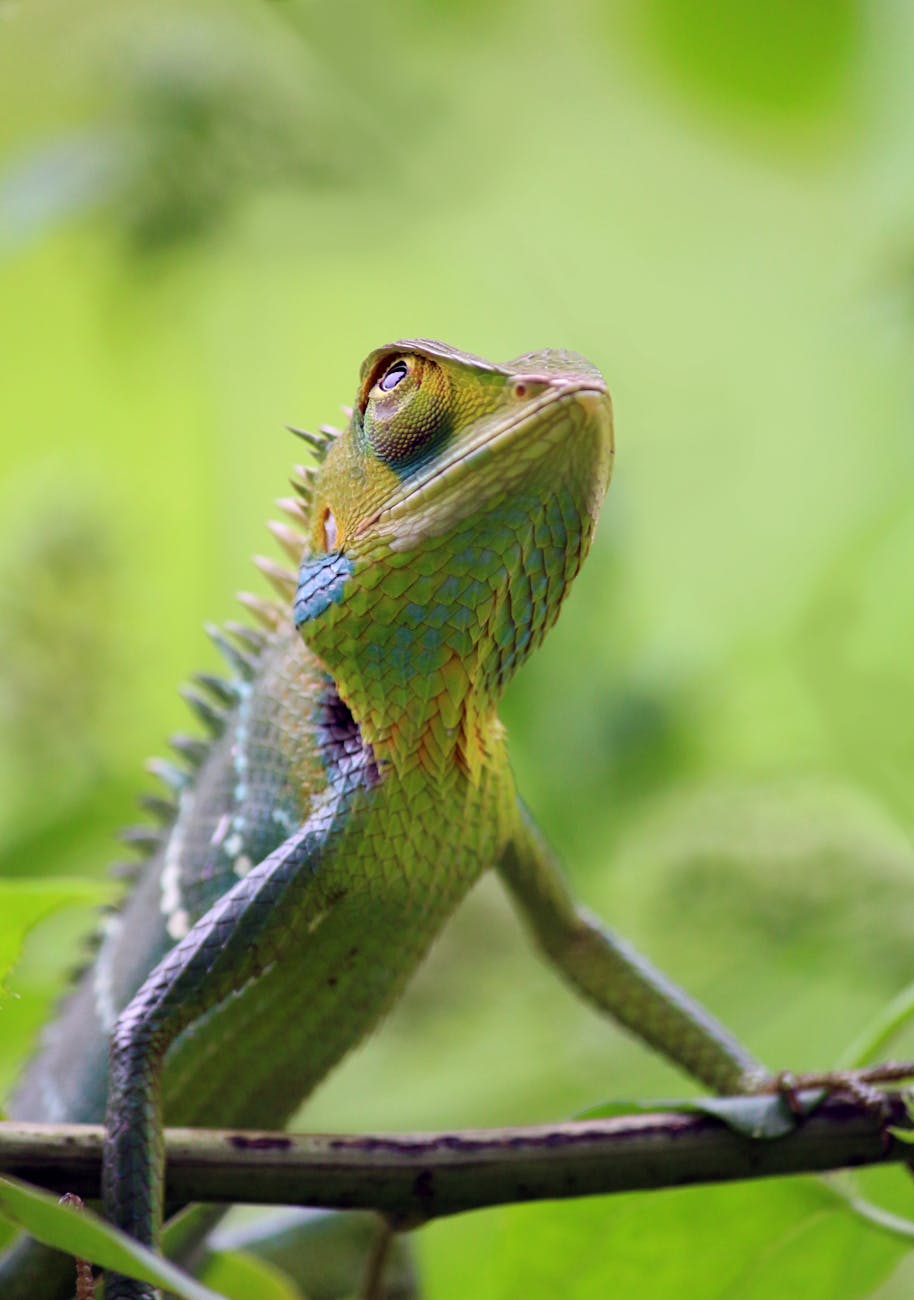
Table of Contents
- Introduction
- Meaning of Reproduction in Lizard
- Structure of the Reproductive System in Lizard
- Process of Reproduction in Lizard
- Characteristics of Lizard Reproduction
- Biological Significance of Reproduction in Lizard
- Revision Questions and Answers
Meaning of Reproduction in Lizard
Reproduction in lizard refers to the biological process through which lizards give rise to new individuals of their kind through the union of male and female gametes. This is a sexual process involving a male lizard transferring sperm into the female’s body, where fertilization of the eggs takes place, after which the female either lays eggs or, in some cases, gives birth to live young depending on the species.
Structure of the Reproductive System in Lizard
The reproductive system of a lizard is well-developed and sexually dimorphic, which means that males and females have distinct reproductive organs.
In male lizards, the reproductive system includes a pair of testes that produce sperm, and these are connected to the cloaca through the vas deferens. Male lizards also have a pair of copulatory organs called hemipenes, which are used to transfer sperm into the female during mating.
In female lizards, the reproductive system consists of a pair of ovaries that produce eggs and a pair of oviducts through which the eggs travel to the cloaca. The oviducts also secrete layers of protective materials around the eggs before they are laid.
Process of Reproduction in Lizard
The process of reproduction in lizards begins with courtship behavior, where the male lizard attracts the female by displaying colors, making body movements, or engaging in territorial fights with other males.
Once the female is receptive, the male mounts the female and uses one of his hemipenes to inseminate her through the cloacal opening, leading to internal fertilization of the eggs.
After fertilization, the female lays fertilized eggs in a warm, hidden location such as under soil, leaves, or in crevices. These eggs have leathery shells that protect the developing embryos inside.
In some species, known as ovoviviparous lizards, the eggs develop inside the female’s body and the young are born alive.
The eggs or developing young are usually left to hatch or emerge on their own without any form of parental care.
Characteristics of Lizard Reproduction
Reproduction in lizards shows several distinctive characteristics.
- It involves internal fertilization through copulation using hemipenes.
- Most lizards are oviparous, meaning they lay eggs, but some are ovoviviparous.
- Fertilized eggs have leathery shells and are laid in hidden places for protection.
- The development of the embryo occurs either externally (in oviparous lizards) or internally (in ovoviviparous species).
- There is usually no parental care after egg-laying or birth.
READ ALSO – Reproduction in Reptiles: Meaning, Types and Structures
Biological Significance of Reproduction in Lizard
Reproduction in lizards is biologically significant as it ensures the survival of the species across generations. The method of internal fertilization provides a higher chance of successful reproduction in dry environments where external fertilization might not be effective. The laying of eggs with protective coverings helps safeguard the developing embryo from desiccation and predators. Also, in species that give birth to live young, the adaptation enhances survival in cooler climates. Overall, these reproductive strategies have contributed greatly to the wide distribution and ecological success of lizards.
READ ALSO – Reproduction in Toad: Meaning, Process and Characteristics
Frequently Asked Questions
1. What type of fertilization occurs in lizards?
Answer: Internal fertilization.
2. What are hemipenes in male lizards used for?
Answer: They are used for transferring sperm into the female during mating.
3. Where are lizard eggs usually laid?
Answer: In warm, hidden places such as under soil, leaves, or in rock crevices.
4. Do all lizards lay eggs?
Answer: No, while most lizards are oviparous, some are ovoviviparous and give birth to live young.
5. What is the function of the oviduct in female lizards?
Answer: The oviduct transports the eggs and secretes protective coverings around them.