
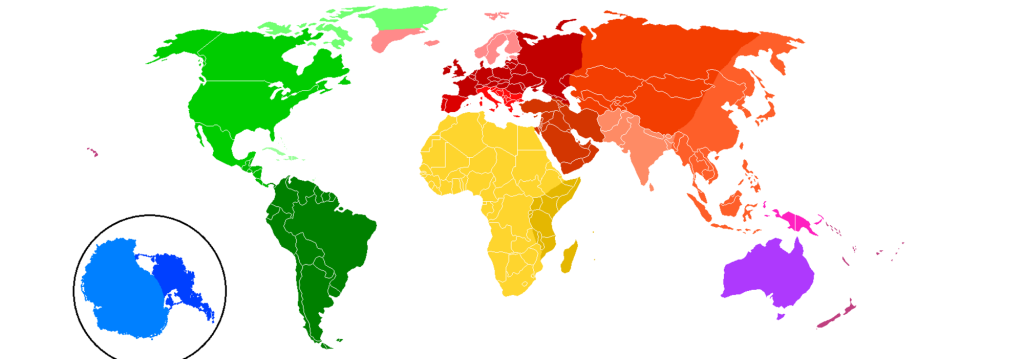
The list of countries in the world and their capitals represents a fundamental aspect of global geography, helping us understand how nations are structured and governed. The world is home to 195 sovereign countries, each with its own capital city that functions as the political, administrative, or cultural center of the nation. Capital cities often house key government institutions, historical monuments, and are central to national identity and development.
In this blog post, we provide a comprehensive list of all countries and their capitals, organized continent by continent and in alphabetical order for easy reference. Whether you’re a student, traveler, teacher, or simply a curious reader, this tabular guide offers a quick and informative way to explore the capitals of every country around the globe.
What is a country?
A country is a sovereign nation recognized as an independent political entity with defined borders, a government, and the ability to engage in international relations. Each country typically designates a capital city, which serves as the central location for its administrative, political, and often economic activities.
And also the list of countries in the world and their capitals refers to the organized record of all recognized sovereign nations along with their official capital cities. This list is essential for understanding global geography, political structures, and international diplomacy, as capital cities often symbolize national identity and house key institutions like the presidency, parliament, and supreme courts.
List of Countries in the World with their Capitals
| Country | Capital |
|---|---|
| Afghanistan | Kabul |
| Albania | Tirana |
| Algeria | Algiers |
| Andorra | Andorra la Vella |
| Angola | Luanda |
| Antigua and Barbuda | St. John’s |
| Argentina | Buenos Aires |
| Armenia | Yerevan |
| Australia | Canberra |
| Austria | Vienna |
| Azerbaijan | Baku |
| Bahamas | Nassau |
| Bahrain | Manama |
| Bangladesh | Dhaka |
| Barbados | Bridgetown |
| Belarus | Minsk |
| Belgium | Brussels |
| Belize | Belmopan |
| Benin | Porto-Novo |
| Bhutan | Thimphu |
| Bolivia | Sucre (constitutional), La Paz (seat of government) |
| Bosnia and Herzegovina | Sarajevo |
| Botswana | Gaborone |
| Brazil | Brasília |
| Brunei | Bandar Seri Begawan |
| Bulgaria | Sofia |
| Burkina Faso | Ouagadougou |
| Burundi | Gitega |
| Cabo Verde | Praia |
| Cambodia | Phnom Penh |
| Cameroon | Yaoundé |
| Canada | Ottawa |
| Central African Republic | Bangui |
| Chad | N’Djamena |
| Chile | Santiago |
| China | Beijing |
| Colombia | Bogotá |
| Comoros | Moroni |
| Congo (Congo-Brazzaville) | Brazzaville |
| Costa Rica | San José |
| Croatia | Zagreb |
| Cuba | Havana |
| Cyprus | Nicosia |
| Czech Republic (Czechia) | Prague |
| DR Congo | Kinshasa |
| Denmark | Copenhagen |
| Djibouti | Djibouti |
| Dominica | Roseau |
| Dominican Republic | Santo Domingo |
| Ecuador | Quito |
| Egypt | Cairo |
| El Salvador | San Salvador |
| Equatorial Guinea | Malabo |
| Eritrea | Asmara |
| Estonia | Tallinn |
| Eswatini | Mbabane |
| Ethiopia | Addis Ababa |
| Fiji | Suva |
| Finland | Helsinki |
| France | Paris |
| Gabon | Libreville |
| Gambia | Banjul |
| Georgia | Tbilisi |
| Germany | Berlin |
| Ghana | Accra |
| Greece | Athens |
| Grenada | St. George’s |
| Guatemala | Guatemala City |
| Guinea | Conakry |
| Guinea-Bissau | Bissau |
| Guyana | Georgetown |
| Haiti | Port-au-Prince |
| Honduras | Tegucigalpa |
| Hungary | Budapest |
| Iceland | Reykjavik |
| India | New Delhi |
| Indonesia | Jakarta |
| Iran | Tehran |
| Iraq | Baghdad |
| Ireland | Dublin |
| Israel | Jerusalem |
| Italy | Rome |
| Ivory Coast (Côte d’Ivoire) | Yamoussoukro |
| Jamaica | Kingston |
| Japan | Tokyo |
| Jordan | Amman |
| Kazakhstan | Astana (Nur-Sultan) |
| Kenya | Nairobi |
| Kiribati | South Tarawa |
| Korea, North | Pyongyang |
| Korea, South | Seoul |
| Kuwait | Kuwait City |
| Kyrgyzstan | Bishkek |
| Laos | Vientiane |
| Latvia | Riga |
| Lebanon | Beirut |
| Lesotho | Maseru |
| Liberia | Monrovia |
| Libya | Tripoli |
| Liechtenstein | Vaduz |
| Lithuania | Vilnius |
| Luxembourg | Luxembourg City |
| Madagascar | Antananarivo |
| Malawi | Lilongwe |
| Malaysia | Kuala Lumpur |
| Maldives | Malé |
| Mali | Bamako |
| Malta | Valletta |
| Marshall Islands | Majuro |
| Mauritania | Nouakchott |
| Mauritius | Port Louis |
| Mexico | Mexico City |
| Micronesia | Palikir |
| Moldova | Chișinău |
| Monaco | Monaco |
| Mongolia | Ulaanbaatar |
| Montenegro | Podgorica |
| Morocco | Rabat |
| Mozambique | Maputo |
| Myanmar (Burma) | Naypyidaw |
| Namibia | Windhoek |
| Nauru | Yaren |
| Nepal | Kathmandu |
| Netherlands | Amsterdam |
| New Zealand | Wellington |
| Nicaragua | Managua |
| Niger | Niamey |
| Nigeria | Abuja |
| North Macedonia | Skopje |
| Norway | Oslo |
| Oman | Muscat |
| Pakistan | Islamabad |
| Palau | Ngerulmud |
| Panama | Panama City |
| Papua New Guinea | Port Moresby |
| Paraguay | Asunción |
| Peru | Lima |
| Philippines | Manila |
| Poland | Warsaw |
| Portugal | Lisbon |
| Qatar | Doha |
| Romania | Bucharest |
| Russia | Moscow |
| Rwanda | Kigali |
| Saint Kitts and Nevis | Basseterre |
| Saint Lucia | Castries |
| Saint Vincent and Grenadines | Kingstown |
| Samoa | Apia |
| San Marino | San Marino |
| São Tomé and Príncipe | São Tomé |
| Saudi Arabia | Riyadh |
| Senegal | Dakar |
| Serbia | Belgrade |
| Seychelles | Victoria |
| Sierra Leone | Freetown |
| Singapore | Singapore |
| Slovakia | Bratislava |
| Slovenia | Ljubljana |
| Solomon Islands | Honiara |
| Somalia | Mogadishu |
| South Africa | Pretoria (administrative), Bloemfontein (judicial), Cape Town (legislative) |
| South Sudan | Juba |
| Spain | Madrid |
| Sri Lanka | Sri Jayawardenepura Kotte |
| Sudan | Khartoum |
| Suriname | Paramaribo |
| Sweden | Stockholm |
| Switzerland | Bern |
| Syria | Damascus |
| Taiwan | Taipei |
| Tajikistan | Dushanbe |
| Tanzania | Dodoma |
| Thailand | Bangkok |
| Togo | Lomé |
| Tonga | Nuku’alofa |
| Trinidad and Tobago | Port of Spain |
| Tunisia | Tunis |
| Turkey | Ankara |
| Turkmenistan | Ashgabat |
| Tuvalu | Funafuti |
| Uganda | Kampala |
| Ukraine | Kyiv |
| United Arab Emirates (UAE) | Abu Dhabi |
| United Kingdom | London |
| United States | Washington, D.C. |
| Uruguay | Montevideo |
| Uzbekistan | Tashkent |
| Vanuatu | Port Vila |
| Vatican City | Vatican City |
| Venezuela | Caracas |
| Vietnam | Hanoi |
| Yemen | Sana’a |
| Zambia | Lusaka |
| Zimbabwe | Harare |
This comprehensive list covers all 195 countries in the world, along with their respective capitals.
Largest Countries in the World
Largest countries in the world by area, showing their country, capital, and land area (in square kilometers):
| Country | Capital | Area (sq km) |
|---|---|---|
| Russia | Moscow | 17,098,242 |
| Canada | Ottawa | 9,984,670 |
| China | Beijing | 9,596,961 |
| United States | Washington, D.C. | 9,525,067 |
| Brazil | Brasília | 8,515,767 |
| Australia | Canberra | 7,692,024 |
| India | New Delhi | 3,287,263 |
| Argentina | Buenos Aires | 2,780,400 |
| Kazakhstan | Astana (Nur-Sultan) | 2,724,900 |
| Algeria | Algiers | 2,381,741 |
This table highlights the top 10 largest countries in the world by land area.
Smallest Countries in the World by Land Area
Smallest countries in the world by land area with their country, capital, and area (in square kilometers):
| Country | Capital | Area (sq km) |
|---|---|---|
| Vatican City | Vatican City | 0.49 |
| Monaco | Monaco | 2.02 |
| Nauru | Yaren District (de facto) | 21 |
| Tuvalu | Funafuti | 26 |
| San Marino | San Marino | 61 |
| Liechtenstein | Vaduz | 160 |
| Marshall Islands | Majuro | 181 |
| Saint Kitts and Nevis | Basseterre | 261 |
| Maldives | Malé | 300 |
| Malta | Valletta | 316 |
This list highlights the top 10 smallest countries in the world by land area.
Revision Questions
- How many countries are there in the world, and what is the format of the list provided in this post?
- What is the capital of Australia, and what makes the city significant?
- Which country has Brasília as its capital, and why is it unique?
- What are the capitals of Japan and China, and how are they different in terms of their political significance?
- Name the countries in the world that have Washington, D.C., as their capital and mention their significance.
Frequently Asked Questions
1. How many countries are there in the world and do all of them have officially recognized capitals?
There are 195 officially recognized countries in the world (193 UN member states and 2 observer states), and nearly all of them have designated capital cities. A few countries have multiple capitals for administrative, legislative, or judicial purposes, such as South Africa.
2. Why do some countries have more than one capital city?
Some countries use multiple capital cities to distribute political power, reflect historical developments, or balance regional interests. For example, South Africa has three capitals: Pretoria (administrative), Cape Town (legislative), and Bloemfontein (judicial).
3. Are all capital cities the largest cities in their countries?
No. Many capital cities are not the largest by population. Examples include:
- Nigeria – Capital: Abuja (Largest city: Lagos)
- Australia – Capital: Canberra (Largest city: Sydney)
- USA – Capital: Washington, D.C. (Largest city: New York City)
4. Do all countries choose their capitals based on population or economic strength?
Not necessarily. Capitals are often chosen based on political neutrality, historical importance, central location, or security reasons, rather than size or economic power. For instance, Brazil moved its capital from Rio de Janeiro to the more centrally located Brasília.
5. Can a country change its capital city?
Yes. Countries can and do change their capitals for administrative, economic, or political reasons. Recent examples include:
- Kazakhstan, which changed its capital from Almaty to Astana (now Nur-Sultan, later changed back to Astana).
- Indonesia, which is in the process of moving from Jakarta to a new capital, Nusantara.
6. What continent has the highest number of countries and capitals?
Africa has the highest number of countries—54 recognized sovereign states—each with its own capital city. This makes Africa the continent with the most capitals globally.
7. Is it possible for a country to have a capital that is not a city?
Almost all capitals are cities, but in rare cases, a district or territory can function as a capital. For example, Washington, D.C. is a federal district, not a state, yet it serves as the capital of the United States.
Conclusion on Countries in the Globe
Understanding the list of countries in the world and their capitals is essential for gaining a clearer perspective on global geography, international relations, and cultural diversity. Capital cities serve as important centers of governance, history, and identity in each nation. From the political heart of Washington, D.C., to the vibrant streets of New Delhi, each capital reflects the unique character and priorities of its country.
This comprehensive guide, organized by continent and presented in alphabetical order, helps students, researchers, and global citizens alike stay informed about the structure of the modern world. As the global landscape continues to evolve, knowing the countries and their capitals remains a valuable foundation for education, travel, and global awareness.
RELATED ARTICLES
- Most Peaceful Countries in the World to Live, Study and Work
- List of Asian Countries and their Capitals – [Full List]
- List of European Countries and their Capitals [Complete List]
- List of African Countries and their Capitals you need to know
- List of Portuguese Speaking Countries in the world
- List of Spanish Speaking Countries in the world official or national
- List of Countries and their Official Languages in the World